What's Buried in the Yard Now Has to Be on the Form
August 13, 2026
August 13, 2026
Ask a Nassau County real estate attorney what actually slows down an East Meadow closing, and the answer rarely involves the roof or the kitchen. It is usually one of two things nobody thinks about until a form forces the question in writing: what kind of sewage system does this house have, and is there a fuel tank buried somewhere on the lot. For twenty-two years, New York sellers had a legal way to sidestep both questions. That option disappeared in 2024, and in a hamlet built mostly before public sewer reached every block, the change lands harder here than in most of Nassau County.
Since March 2002, New York's Property Condition Disclosure Act has required sellers of one-to-four-family homes to answer a form full of specific questions about the property before a buyer signs a contract. But the law also gave sellers an escape hatch: skip the form entirely, hand the buyer a $500 credit at closing, and move on. For two decades, that was the default move across downstate New York. Buyer's attorneys expected it. Nobody filled out the long form if they didn't have to.
The state legislature closed that loophole in 2023, and the change took effect in March 2024. The amended Real Property Law §462 removed the $500 credit option and grew the disclosure form from 49 questions to 56, adding a set of flood-history questions in the process. The New York State Bar Association's summary of the change is direct about what this means in practice: sellers now have to actually answer, and a knowingly false or incomplete answer can expose them to a claim from the buyer, before or after the deed changes hands.
That is a real shift in leverage. It used to cost a seller $500 to avoid a hard question. Now it costs nothing, and the honest answer is the only legal option.
Buried inside that 56-question form are two that carry more weight in this hamlet than almost anywhere else in Nassau. The statute spells them out word for word:
What is the type of sewage system (circle all that apply: public sewer, private sewer, septic or cesspool)? If septic or cesspool, age? Date last pumped? Frequency of pumping? Any known material defects?
Are there or have there ever been fuel storage tanks above or below the ground on the property? If yes, are they currently in use? Are they leaking or have they ever leaked?
Answering "unknown" to either question is legal. It is also the fastest way to make a buyer's attorney nervous during the three-to-five day review period that follows contract signing in New York's attorney-close process. An honest, documented "yes, and here's the record" tends to keep a deal moving. A shrug tends to invite a rider, a price reduction, or a request for testing that could have been done before the house ever hit the market.
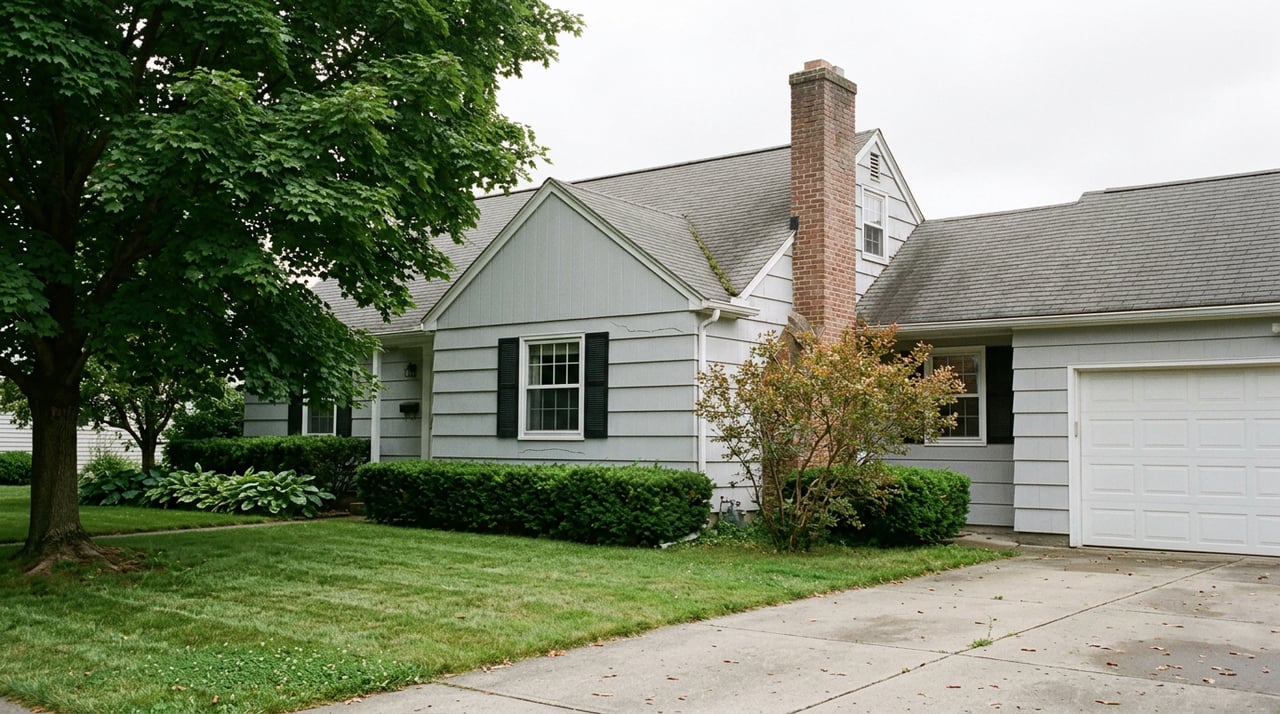
East Meadow's housing stock is mostly a product of the same postwar building wave that produced Levittown next door. Sections like Barnum Woods, built on what was once the Barnum farm, and Salisbury are full of Cape Cods and splits that predate a lot of the infrastructure buyers now take for granted. Large stretches of the hamlet were never brought onto public sewer, which is why cesspool and septic service companies list East Meadow among their core Nassau County territories rather than treating it as an edge case.
Local cesspool contractors who work these streets regularly point to the same two factors: sandy soil and a high water table, both of which shorten the working life of an older system. A line installed before the 1980s and never replaced is often cast iron, clay, or early PVC, none of which was built to last four decades in that kind of ground. When it fails, it rarely gives a warning. Slow drains turn into a backup, often at the worst possible time.
None of this means an East Meadow cesspool is a defect. It means the paperwork trail behind it now matters in a way it didn't two years ago.
| Action | Typical Cost | When It Applies |
|---|---|---|
| Routine cesspool pump-out | $300 to $600 | Preventive maintenance every 2 to 3 years |
| Full system replacement or nitrogen-reducing conversion | $15,000 to $30,000 | Aging or failing systems, or when upgrading ahead of a sale |
| Nassau County SEPTIC grant offset | Up to $20,000 | Replacing a cesspool or septic system with an approved nitrogen-reducing system |
The gap between the second and third rows is the part worth understanding before you list.
Nassau County has been running a program called the Septic Environmental Program to Improve Cleanliness, or SEPTIC, since May 2021. It covers half the cost of replacing a conventional cesspool or septic system with an approved nitrogen-reducing treatment system, up to a cap of $20,000 per applicant, funded through a combination of federal and state dollars. As of July 2025, the Nassau County program had awarded more than $8 million toward roughly 400 approved upgrades, with 186 already installed.
The eligibility rules matter for anyone thinking about this ahead of a sale. The property has to be served by an existing cesspool or septic system, not connected to public or private sewer and not inside a designated sewer district, unless site constraints prevent connection. You need a valid certificate of occupancy and no open tax liens. Once an application is approved, homeowners generally have up to twelve months to complete the installation, which means this is not something you start the week before an open house.
There is a catch worth knowing about too: once the new system is in, the county requires an annual maintenance agreement, typically around $300 a year, with proof submitted every year. Skip that step and the county can require repayment of the grant. It is not free money in the sense of set-it-and-forget-it. It is a serious offset if you plan the timing.
Oil heat is common in East Meadow's older housing stock, and that means underground and above-ground fuel tanks show up regularly in these transactions. Most residential heating oil tanks fall under 1,100 gallons, which puts them below New York State's Petroleum Bulk Storage threshold. But the state's own guidance flags Nassau, Suffolk, and Westchester as delegated counties where local health departments may still regulate smaller tanks, which is why a call to Nassau County before listing is worth the ten minutes.
Age matters here in a very specific way. Nassau County's own petroleum bulk storage guidance is blunt about it: a tank thirty years or older may be nearing failure and should be replaced before it leaks. If it has leaked, remediation costs on Long Island can range from around $10,000 for a minor, quickly caught issue to well over $100,000 for a property with significant soil contamination. That is a wide enough range that a seller genuinely does not want to be guessing at attorney review.
As of June 2026, homes listed in East Meadow carried a median asking price near $799,000, about $497 a square foot, and the typical listing was going under contract in roughly 26 days. That is a fast market. It is also exactly the kind of market where a stalled attorney review because of an undocumented cesspool or an unverified tank feels disproportionately painful, because the buyer had other options and the seller just watched three weeks of momentum evaporate into a rider negotiation.
The fix is not complicated. Before you list, get your cesspool or septic system's age and pump history documented if you don't already have it. If the system is old enough that replacement is a realistic near-term need, look into the SEPTIC application timeline now rather than after an accepted offer. If your home has ever had an oil tank, aboveground or buried, get a professional to confirm its status and pull whatever paperwork exists on removal or abandonment. None of this is required reading under the old rules. Under the current form, it is the difference between answering a direct question with a fact and answering it with "unknown."
Do I have to disclose a cesspool that has never given me any trouble? Yes. The form asks for the system type, its age, and pumping history regardless of whether it has ever failed. A working system with no known defects can still be answered honestly as "no known material defects," but the age and pumping questions still need real answers.
What if I genuinely don't know how old my system is? "Unknown" is a legal answer on the form, but it is the one most likely to prompt a buyer's attorney to request testing or documentation before moving forward, which can add time to the deal you weren't planning for.
Does applying for the Nassau County SEPTIC grant delay a sale? It can, since approved applicants generally have up to twelve months to complete installation. If you're considering a system replacement as part of getting the house ready to list, the timeline is worth mapping out well before you plan to sign a listing agreement, not after you already have a buyer under contract.
If you're weighing whether to address a cesspool or oil tank question before listing your East Meadow home, or you want a clearer read on what your specific property's paperwork trail looks like, Michelle Norris has spent years walking Nassau and Suffolk sellers through exactly this kind of pre-listing groundwork. Let's Connect and talk through what your home's history actually says before a buyer's attorney asks.
Stay up to date on the latest real estate trends.



From your first consultation to the closing table, Michelle is committed to making your real estate journey smooth, informed, and successful. Whether you're preparing to sell, searching for your next home, or exploring Long Island's 55+ communities, Michelle provides the expertise, strategy, and personal attention needed to achieve your goals.

MICHELLE NORRIS
(516) 512-0920
[email protected]
1000 Park Blvd
Massapequa Park, NY 11762