The Zoning Line That Splits Dix Hills Into Two Different Markets
August 13, 2026
August 13, 2026
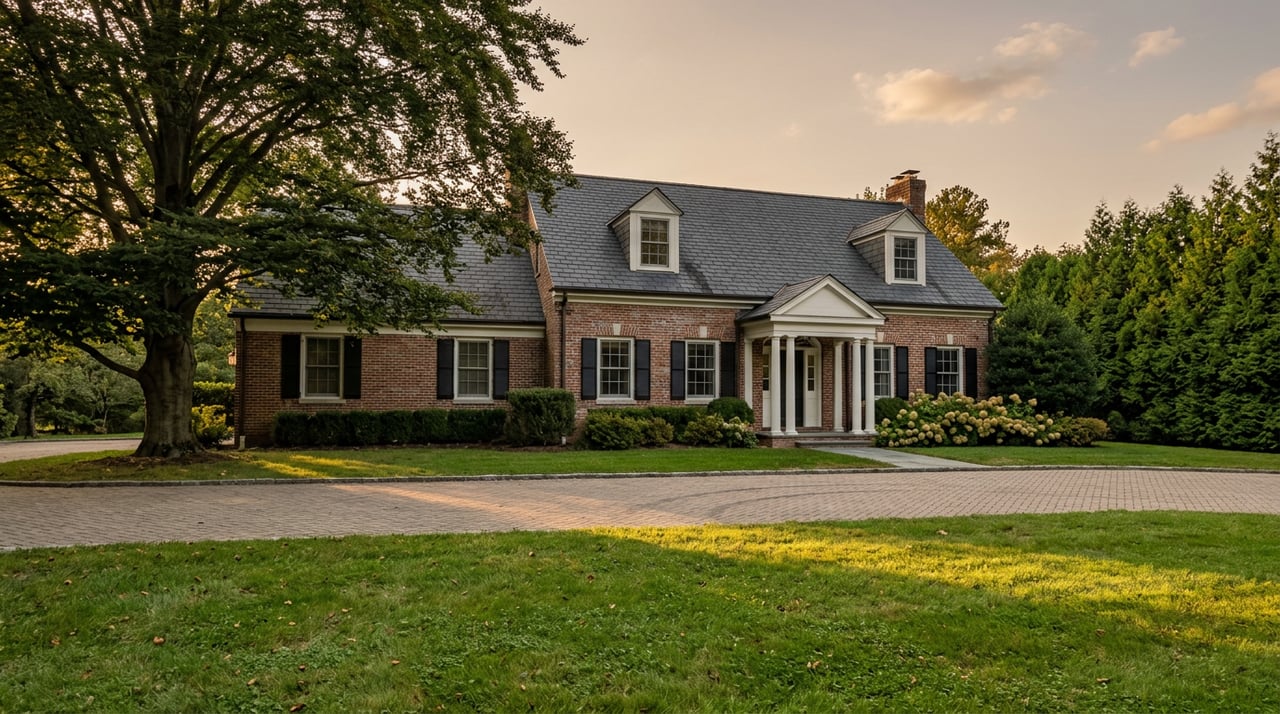
Picture two listings in Dix Hills priced within about ten thousand dollars of each other. Same commute to the Long Island Expressway, same general vintage of curb appeal in the photos. One sits on a legacy lot under half an acre, the kind carved out before the town's current zoning took hold. The other sits on a full acre, zoned R-40, with enough frontage that a builder could plausibly split it into two separate conforming lots.
A buyer scanning both listings side by side, sorted by price, would have no way to know which one came with the right to double its footprint and which one didn't. That gap is the real story in Dix Hills right now, and it explains far more about the market than the median price ever will.
Start with what the numbers actually say, because they contradict each other in a useful way. Redfin's data for the three months ending May 2026 put the median sale price in Dix Hills at $1.2 million, down slightly, about 0.69 percent, from the same window a year earlier. At the same time, the median sale price per square foot climbed to $477, up 15.1 percent year over year. Homes were also taking longer to sell, an average of 46 days compared with 40 days the year before.
Read those three numbers together and something doesn't add up if you assume Dix Hills is one uniform market. Prices are flat. Per-square-foot value is climbing fast. Time on market is stretching out. That combination usually means buyers are pricing something other than the interior finishes. In this case, they're pricing the land underneath the house, and specifically what that land is legally allowed to become.
Movoto's July 2026 figures tell a similar story from a different angle. Active listings that month carried a median list price of $1.39 million at $460 per square foot, with the broader range of homes for sale running from roughly $699,000 up to $6.399 million. New-construction floor plans tracked separately across the hamlet ranged from $579,000 to $5,685,000. That's not a spread you get from square footage alone. A 5,000-square-foot home on a non-conforming half-acre lot and a 5,000-square-foot home on a conforming acre lot are not the same asset, even if the tape measure says otherwise.
The mechanism behind that spread has a name: R-40 zoning. The Town of Huntington's zoning code sets a one-acre minimum lot size in R-40 districts, and much of Dix Hills falls into this classification. You can see the practical effect of that rule in a land listing that came on the market earlier this year: a 2.33-acre parcel zoned R-40, marketed specifically for its potential to subdivide into two fully conforming one-acre lots without needing a variance. The listing's mailing address read Huntington Station, a reminder that Dix Hills shares a ZIP code with its postal neighbor and doesn't always announce itself on paper the way a listing description does.
That parcel is a clean illustration of what a conforming R-40 lot actually is. It's not just a big yard. It's land that, under current zoning, can be divided, rebuilt, or expanded without asking the town's permission first. A buyer purchasing that kind of lot is purchasing optionality: the right to tear down and build bigger, or to carve off a second buildable parcel, without a hearing.
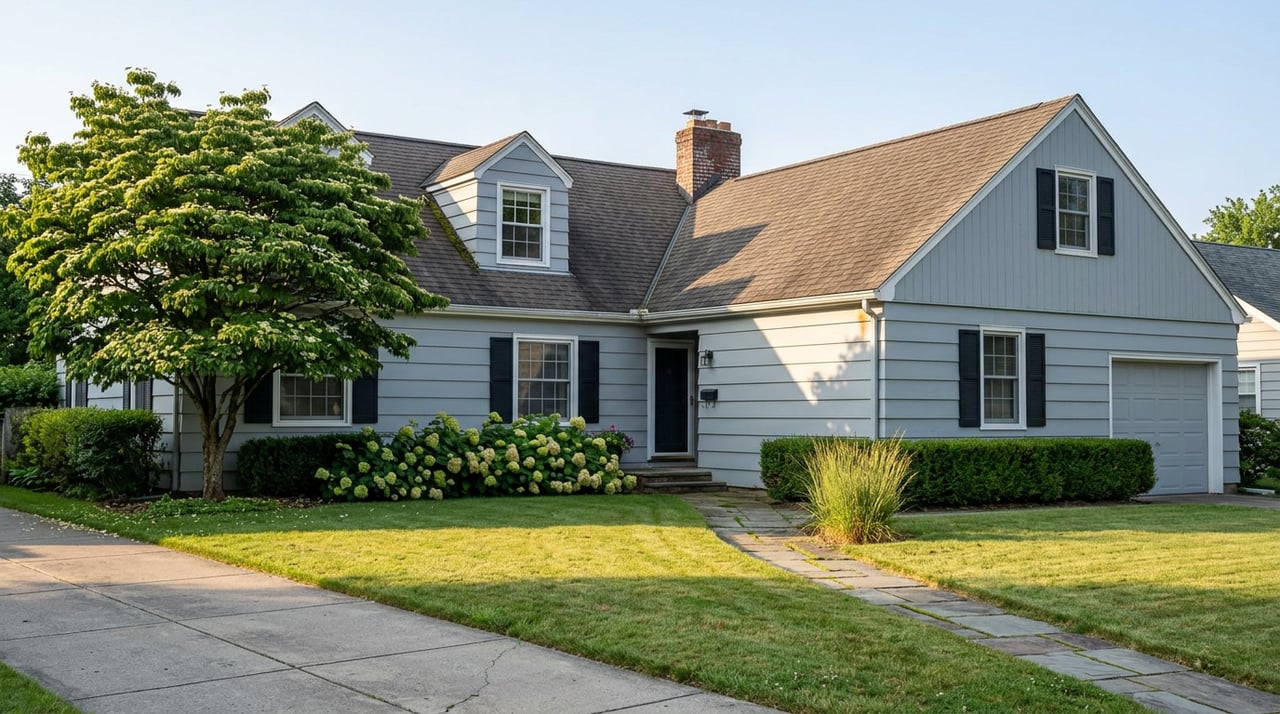
Compare that to brand-new homes going up right now on lots of roughly 15,246 square feet, about a third of an acre, or 23,940 square feet, a little over half an acre. These aren't tired older houses waiting for a buyer with vision. They're freshly built, five- and six-bedroom colonials on lots that simply predate the current one-acre standard, a common situation in towns that raised their zoning minimums after neighborhoods were already platted. The house can be brand new. The lot underneath it is still working within an older, smaller set of rules, which caps how much bigger the next owner could ever make it without buying the parcel next door. You can review the lot area and bulk requirements that govern this directly through the town's code.
Put simply, a buyer in Dix Hills is choosing between three different products that happen to look similar on a listing sheet.
| Lot Type | Typical Size | What You're Actually Buying | Rebuild Ceiling |
|---|---|---|---|
| Conforming R-40 lot | 1 acre or more | Land-use flexibility: teardown, expansion, or subdivision rights without a variance | High, subject to town approval |
| Legacy non-conforming lot | Roughly a third to half an acre | A lot of record from before the acre minimum, new construction included | Capped by the lot's own boundaries and setback rules |
| Turnkey builder enclave (e.g. Toll Brothers at Dix Hills) | 1 acre, pre-set | New construction with the acre and the zoning work already done for you | Fixed by the builder's plan, no rebuild needed |
None of these is inherently the better purchase. They're different bets. The conforming lot rewards patience and construction risk. The legacy lot rewards buyers who want a finished home now and don't plan to rebuild. The enclave rewards buyers who want the acre without the paperwork.
That third option has a real price tag attached to it. Toll Brothers at Dix Hills is a 30-home enclave with average lot sizes of one acre and, per the builder's December 2024 community announcement, five home designs reaching up to 5,175 square feet and prices starting at $3.1 million, in the Half Hollow Hills School District. Individual home pricing at a builder enclave shifts as inventory turns over, so a buyer should confirm current numbers directly with the sales office rather than treat any single figure as fixed. What doesn't shift is the underlying structure of the deal.
That starting figure is worth sitting with anyway. A buyer paying it isn't paying for square footage in the abstract. They're paying for an acre that's already zoned, already subdivided, already improved, with no variance process, no demolition, and no waiting on a planning board. Stack that against a median sale price of $1.2 million for the broader Dix Hills market over the three months ending May 2026, and the gap starts to look less like a luxury markup and more like the price of skipping every step described in the section above.
The one-acre standard isn't static, and Dix Hills residents have pushed back before when it's been challenged. In 2017, a developer sought to rezone roughly nine acres of former sod farm land on Deer Park Avenue in Dix Hills from R-40 Single Family Residential to R-3M Garden Apartment Special District, to build a 94-unit development for residents 55 and older. Two years later, in 2019, a separate proposal targeted a nursery property along Half Hollow Road, on the Dix Hills-Melville line, for a three-story, 115-unit assisted living facility, again requiring a rezone away from R-40. Both drew organized opposition through public petitions, with residents arguing that changing zoning on former farmland would ripple outward and affect home values on the surrounding R-40 parcels.
Those two proposals are now several years old, and any buyer evaluating a property near a former nursery, sod farm, or other large undeveloped parcel in Dix Hills today should confirm current zoning status directly with the Town of Huntington rather than assume an R-40 designation is permanent. Zoning maps change through the same public process that generated those petitions, and a parcel's classification can shift with a Town Board vote.
Before writing an offer on a Dix Hills property, a few questions separate a buyer who understands what they're purchasing from one who's guessing:
None of this requires a lawyer at the offer stage. It requires knowing which questions the listing itself won't answer.
Does R-40 zoning mean every Dix Hills lot is an acre? No. R-40 sets the minimum for new subdivisions and new construction going forward, but plenty of homes were built under earlier, smaller-lot rules and remain legal as they stand.
Can a non-conforming lot ever become conforming? Generally only by combining it with adjacent land to reach the acre minimum, which requires cooperation from a neighboring owner and town approval.
Does a bigger lot always mean a higher resale price? Not automatically. It means more flexibility for a future buyer or builder, which the market has been pricing in through the per-square-foot premium described above, but flexibility only pays off if someone eventually uses it.
Dix Hills rewards buyers who ask about zoning before they ask about square footage. If you're weighing a legacy lot against a conforming acre, or trying to figure out whether a builder enclave's premium actually pencils out for your plans, Michelle Norris can walk through the specific parcel with you before you write an offer. Let's Connect.
Stay up to date on the latest real estate trends.
From your first consultation to the closing table, Michelle is committed to making your real estate journey smooth, informed, and successful. Whether you're preparing to sell, searching for your next home, or exploring Long Island's 55+ communities, Michelle provides the expertise, strategy, and personal attention needed to achieve your goals.

MICHELLE NORRIS
(516) 512-0920
[email protected]
1000 Park Blvd
Massapequa Park, NY 11762